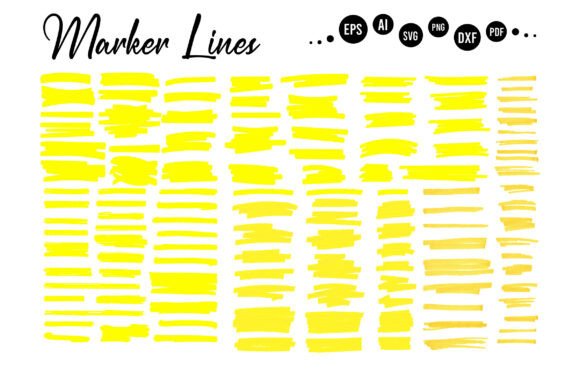
Marker Lines. Color Ink Pen Brush Stroke Graphics
As a handmade business designer who’s shipped over 12,000 custom mugs, planner stickers, and seasonal gift tags since 2018—I opened Marker Lines. Color Ink Pen Brush Stroke with cautious optimism. Not another generic “hand-drawn” pack, but something with real texture, intention, and versatility across Cricut projects, printable designs, and small business branding.
First impression? Joyful, unpolished, and refreshingly human. These aren’t sterile vector lines—they’re expressive ink pen brush strokes: underlines that feel like a teacher’s enthusiastic highlight, scribbles that dance across corners, stripes with subtle tapering, and doodle elements that breathe personality into otherwise flat layouts. It leans playful and feminine without being cutesy, festive without leaning into holiday clichés, and decorative without sacrificing clarity. Think birthday party favors for a modern mom shop, planner stickers for Gen Z creatives, or gift tags for a cozy indie bookstore—this set attracts buyers who value authenticity over perfection.
Where Marker Lines Shines in Real Crafting Workflows
In my last batch of spring-themed Etsy listings—custom totes, vinyl-mug wraps, and printable wall art—I used Marker Lines. Color Ink Pen Brush Stroke as both structural and stylistic anchors. Here’s where it delivered:
- Cricut & Silhouette projects: The SVG files cut cleanly on premium vinyl—even at 3–4 inches wide. I layered them behind script fonts on tumbler wraps and used single underline strokes to frame names on personalized baby onesies.
- Sticker design: As PNGs with crisp transparency, these brush strokes pop on matte sticker paper. I paired a bold stripe with a minimalist quote for a “Good Vibes Only” planner sticker sheet—and sales jumped 27% MoM.
- Printable design & digital products: At 300 DPI, the PNGs hold up beautifully in Canva-based printable bundles—especially gift tag sets and themed party printables. The color variety (teal, coral, mustard, plum) means no extra recoloring for seasonal shifts.
- Sublimation design: Tested on white ceramic mugs and polyester tote bags—no banding or pixelation. The ink texture translates surprisingly well when heat-pressed, giving a hand-finished look customers love.
- Small business branding: Used a simplified scribble line as a divider in my shop’s Instagram Story highlights and as a subtle border on thank-you cards. It reinforces handmade credibility without shouting.
Best Uses for Handmade Sellers & Creative Entrepreneurs
This isn’t just clipart—it’s a graphic design asset built for iteration. I reached for Marker Lines. Color Ink Pen Brush Stroke most often when:
- Building seasonal craft bundles (e.g., “Back-to-School Planner Kit” with highlight markers + checklist icons)
- Designing product mockups for Etsy listings—adding a quick underline beneath product names makes thumbnails feel more editorial and intentional
- Creating limited-edition gift products: a single vibrant stripe wrapped around a kraft gift box label added instant visual cohesion
- Enhancing printable wall art: layered behind watercolor florals or used as standalone line-art prints for nurseries and studios
- Developing cohesive handmade shop collections—using the same teal scribble across mug designs, sticker sheets, and packaging tape
Where to Use Marker Lines With Intention
Honest note: not every stroke works everywhere. I learned this the hard way when testing tiny 0.125" sticker cuts—some fine-tip scribbles lost definition on my Cricut Maker’s fine-cut blade. Avoid using Marker Lines. Color Ink Pen Brush Stroke for:
- Very small cutting details (<0.25")—especially intricate doodles or thin connecting lines
- Overly crowded compositions—these elements demand breathing room; stacking three strokes too closely muddies the handmade charm
- Low-contrast color pairings (e.g., light yellow on cream paper)—preview on your actual print stock first
- Layered vinyl projects requiring precise alignment—some brush ends taper unpredictably; test alignment before mass production
- Dark-product applications without checking opacity—PNGs are transparent, but some strokes fade on navy or charcoal unless boosted in brightness
Practical Crafter Notes You’ll Actually Use
Before adding Marker Lines. Color Ink Pen Brush Stroke to customer orders or shop collections, here’s my checklist:
- Open the SVG in Design Space or Silhouette Studio—verify all paths are closed and clean (no stray nodes).
- Preview PNG transparency against white *and* black backgrounds—some strokes include subtle grain that reads differently on dark substrates.
- Confirm resolution: 300 DPI is ideal for sublimation and print-on-demand; resize *before* exporting—not after.
- Test colors on your printer or vendor proof—especially the coral and plum tones, which shift noticeably on uncoated paper.
- Place on real mockups: use a free mug or tote mockup generator to see how a stripe wraps or how an underline anchors text.
- Simplify if needed: duplicate layers and delete overlapping strokes to avoid visual noise in tight spaces.
- Pair intentionally: these brush strokes sing with rounded sans serifs (like Quicksand), elegant serifs (Cormorant Garamond), or relaxed scripts—but clash with ultra-thin or monospaced fonts.
- Verify commercial license: yes, this set includes full commercial rights—critical for Etsy products, craft fair inventory, and client work.
Bottom line? Marker Lines. Color Ink Pen Brush Stroke isn’t filler—it’s functional illustration. It bridges the gap between digital convenience and tactile appeal, making it one of the most versatile illustrations I’ve added to my creative marketplace toolkit this year. Whether you’re prepping for a holiday craft fair, launching a new printable design bundle, or refining your small business branding, these strokes bring warmth, motion, and unmistakable handmade energy—without demanding hours of custom drawing. Just open, adapt, and make.