Discount Sale Social Media Post
As a designer who’s stitched hundreds of client projects—from boutique aprons to Etsy baby onesies—I opened Discount Sale Social Media Post expecting a quick graphic for digital promotion. Instead, I paused. This isn’t just a social template—it’s a design with quiet intentionality that *wants* to become something tactile: a stitched tote bag tag, a limited-run sweatshirt chest logo, or a cheerful kitchen towel border.
A First Stitch Feels Like a Conversation
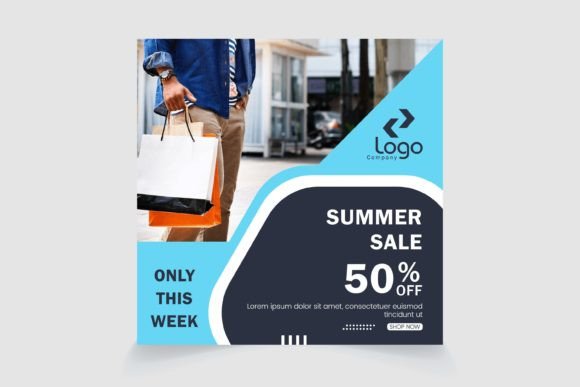
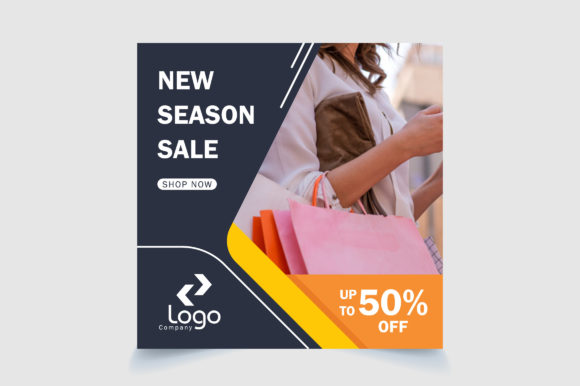
The moment I zoomed in, I noticed what makes Discount Sale Social Media Post stand out among Print Templates: its rhythm. Clean vector lines, generous negative space, and balanced weight between headline text and supporting graphics mean it doesn’t shout—it invites. It leans into warmth without saccharine clutter: think rounded sans-serif lettering, subtle icon accents (a shopping bag, a heart, maybe a gift box), and breathing room around every element. That spacing isn’t just “print-ready”—it’s *embroidery-aware*. No tight corners begging to fray, no overlapping strokes that would collapse into muddy fill stitch under thread.
I immediately pictured it stitched on a natural linen tea towel—soft grey thread on oat-colored fabric—used as a small-batch holiday gift for local coffee shop customers. The mood? Friendly urgency—not desperation. It says “this is special, and you’re invited,” not “everything must go.” That tone translates directly to how your customers *feel* holding the finished product.
Where It Stitches Well (and Where It Asks for Care)
Discount Sale Social Media Post shines brightest on medium-to-large embroidery real estate: 4”–6” hoop areas on tote bags, front panels of relaxed-fit sweatshirts, or centered pillow covers. Its vector clarity holds up beautifully in satin stitch outlines and smooth fill-stitch zones—no jagged edges, no pixelated ghosts. On stable fabrics like cotton twill, midweight canvas, or brushed poly-cotton blends, it stitches cleanly with standard cutaway stabilizer.
But—and this matters—I wouldn’t reach for it blindly on:
- Curved or layered surfaces like structured caps or double-layered baby bibs—its horizontal emphasis can distort if not repositioned thoughtfully;
- Thin or highly textured fabrics like lightweight rayon or bouclé—we’d lose definition in fine details;
- Dark or heavily heathered backgrounds unless thread contrast is intentionally dialed up (test those letterforms in black-and-white mockups first);
- Products meant for heavy laundering (think kids’ towels or chef aprons)—dense fill areas need extra anchoring; review stitch density before finalizing.
It’s not built for micro-embroidery. Tiny lettering or delicate icon strokes won’t resolve well under 2.5” hoops or on stretchy knits. Save it for pieces where clarity and charm matter more than miniaturization.
More Than a Graphic—It’s a Brand Moment
When you embroider Discount Sale Social Media Post, you’re not just adding decoration—you’re reinforcing trust. Handmade products carry weight because they’re intentional. This design supports that. Its clean layout feels professional but never cold; its friendly energy reads as human-made, not algorithm-generated. That perception lifts perceived value—especially for Etsy sellers and craft fair vendors offering personalized gifts or small shop merchandise.
I’ve seen too many “sale” designs go overly literal (explosion graphics, cartoon dollar signs) or vanish into visual noise on dark fabric. Discount Sale Social Media Post avoids both traps. It works equally well as an embroidered patch sewn onto a denim jacket or as a subtle corner motif on a nursery blanket—adaptable, not prescriptive.
Practical Designer Notes Before You Stitch
Before loading Discount Sale Social Media Post into your machine or listing it as part of a commercial embroidery bundle:
- Test on scrap fabric first—especially if using textured or dark material. See how thread colors interact with your base.
- Check small details at actual stitch size: zoom in on your embroidery software to inspect corners, joins, and any fine linework.
- Confirm hoop size compatibility. While the vector source is scalable, your machine’s maximum stitch area may require smart simplification—not just shrinking.
- Use appropriate stabilizer. Medium-weight cutaway works for most apparel; tear-away suffices for stable home goods like tea towels.
- Review licensing. Since this is a Graphics download marketed for Print Templates, verify whether redistribution—especially as part of a stitched finished product or digital embroidery file—is permitted. When in doubt, contact the creator.
- Compare light/dark background mockups. A design that pops on white may disappear on navy—adjust thread hue or add underlay if needed.
And one quiet reminder: this design thrives when paired with thoughtful execution—not just technical accuracy, but attention to thread sheen, fabric drape, and how the final piece feels in someone’s hands. That’s where craft business owners and handmade product makers truly differentiate themselves.
Final Thought: A Design That Serves the Maker
Discount Sale Social Media Post isn’t flashy—but it’s reliable. It doesn’t demand attention; it earns it. Whether you’re stitching custom apparel for a local boutique, creating holiday embroidery kits for fellow makers, or building cohesive branding across tote bags and social posts, this template bridges digital and tactile worlds with uncommon grace. It respects your time, your machine, and your customer’s expectations.
That’s rare. And honestly? That’s why I’ll keep it in my working folder—not as a placeholder, but as a trusted tool.