Color Guard Monogram SVG: Crafts & Graphics for Brand-Forward Projects
As a graphic designer who’s built brand identities for collegiate spirit shops, high school booster clubs, and small-batch apparel lines, I recently evaluated Color Guard Monogram, Color Guard SVG for a real client project: a seasonal merchandise launch for a Midwest-based marching arts collective. My goal wasn’t just to see if it “looks nice”—it was to assess whether this asset delivers functional, on-brand, production-ready value across print, digital, and physical touchpoints.
A First Impression That Speaks Vibe Before Details
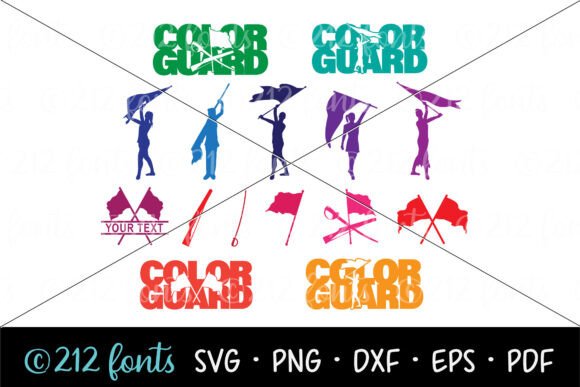
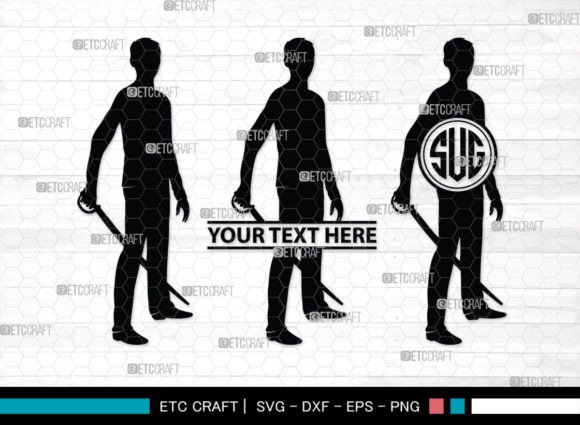
The Color Guard Monogram, Color Guard SVG lands with confident energy—bold outlines, rhythmic symmetry, and stylized letterforms that echo flag choreography and drumline precision. It doesn’t whisper; it commands attention without shouting. Visually, it leans into spirited modern design—not retro, not hyper-minimalist, but grounded in tradition while feeling fresh enough for Instagram stories or Etsy product mockups. The monogram structure suggests unity and legacy, making it ideal for organizations where identity is tied to performance, pride, and community.
Where This Graphic Design Asset Earns Its Place in Real Work
In the client project, we used the Color Guard Monogram, Color Guard SVG as the cornerstone of a cohesive visual system: scaled large for banner backdrops at competitions, simplified for embroidered patches on uniforms, layered subtly into Canva templates for social media graphics, and adapted as a sublimation design for limited-edition water bottles. Its versatility shone most in product mockups—the SVG vector held crisp detail at 300 DPI for packaging design, and the included PNG with transparency allowed seamless integration into editorial design layouts for the client’s newsletter.
You’ll find strong utility in:
- T-shirt design and merch creation—especially when paired with complementary script fonts or bold sans serifs for contrast
- Print-on-demand workflows, thanks to clean vector paths and reliable DXF/EPS compatibility with Cricut, Silhouette, and Brother ScanNCut machines
- Social media graphics, where its bold silhouette reads instantly on mobile feeds and Pinterest pins
- Handmade business branding, lending authenticity and thematic cohesion to Etsy product listings and shop banners
- Campaign visuals—we repurposed it as a decorative accent in flyer headers and invitation borders for a regional color guard showcase
Where Caution—and Creative Judgment—Are Essential
This isn’t a one-size-fits-all graphic design asset. Its strength lies in expressive, energetic contexts—not quiet sophistication. I avoided using the Color Guard Monogram, Color Guard SVG in minimalist packaging design or corporate-style reports, where its visual weight could overwhelm hierarchy. It also loses clarity below 1.5 inches in print or on low-resolution screens, so it’s not ideal for tiny sticker designs or app icons without thoughtful simplification.
On complex backgrounds—textured paper mockups or busy photo overlays—I tested contrast rigorously. The monogram works best against solid or lightly grained surfaces. When placed over photos or gradients, I added subtle drop shadows or light/dark halos to preserve readability and visual trust.
Design Performance: Beyond Aesthetics
What made this asset stand out wasn’t just style—it was how it reinforced brand consistency. Because the monogram functions as both logo and decorative motif, it helped unify everything from website graphics to tote bag prints under a single visual language. That consistency boosted audience engagement: followers recognized the motif across platforms, reinforcing emotional appeal and recognition.
Yet professionalism hinges on execution. In early rounds, the client worried it felt “too crafty” for their growing national presence. We addressed that by pairing the monogram with refined typography (a balanced sans serif for headlines, restrained serif for body copy) and limiting color palettes to three core tones—transforming a crafts element into a strategic brand identity tool.
Practical Designer Notes You Can’t Skip
Before committing to Color Guard Monogram, Color Guard SVG for any client or commercial design project, run these checks:
- Test in black and white—verify legibility and shape integrity without color crutches
- Preview on light and dark backgrounds—confirm contrast meets WCAG AA standards for accessibility
- Scale it down to 16px and up to 48in—look for stray anchor points or thin strokes that break at extremes
- Drop it into real product mockups—not just flat previews, but t-shirt, mug, and vinyl decal renders
- Check print quality—run a test cut on your preferred machine to confirm clean edge definition
- Review file formats: SVG for web/responsive use, EPS for professional print prep, DXF for precise cutting, PNG for quick drag-and-drop in Canva or social tools
- Inspect PNG transparency—ensure no haloing or anti-aliasing artifacts around edges
- Open the SVG in Illustrator or Affinity Designer—confirm all paths are editable, grouped logically, and free of embedded raster elements
- Compare font pairings—try it beside serif, sans serif, script, handwritten, and display fonts to gauge harmony
- Verify commercial license terms—this is non-negotiable for client work, Etsy products, or print-on-demand sales
Final Verdict: A Strategic Creative Asset, Not Just Clipart
The Color Guard Monogram, Color Guard SVG transcends basic clipart. It’s a purpose-built creative design tool—one that supports storytelling, strengthens recognition, and bridges handmade charm with scalable brand execution. For designers supporting small business branding, event campaigns, or digital product launches, it’s a smart addition to your design assets library—provided you treat it like a collaborator, not a shortcut. Used thoughtfully, it elevates mood, anchors messaging, and delivers measurable polish across every marketing visual it touches.